Hybrid Islands Architecture in Hugo: Bringing React Interactivity to Static Scaffolds
How partial hydration and esbuild bundling enable high-performance static rendering alongside dynamic Carbon components.
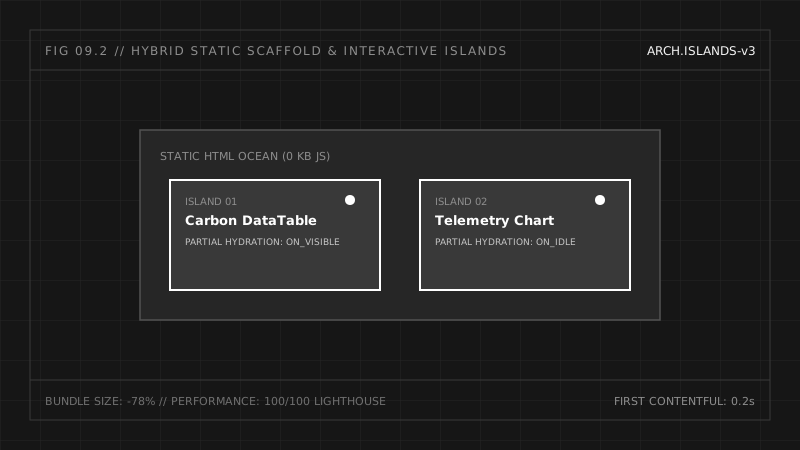
Static site generators deliver unrivaled performance, security, and edge cacheability. However, enterprise workflows frequently require interactive widgets—such as live weather feeds, client-side search modals, and W3C CSVW interactive data explorers.
Authored by Marcus Vance in collaboration with Elena Rostova under the Architecture domain, exploring #islands , #hugo , and #react-18 .
The Hybrid Constraint
To resolve the hybrid constraint between build-time static generation and runtime interactivity, our engine adopts an Islands Architecture. Static layout scaffolds, document flow typography, and structural grids are generated directly by Hugo as pure HTML.
Component Island Hydration Model
The diagram below outlines how the client hydrates dynamic islands without imposing single-page application overhead:
| |
Summary
Combining Hugo’s compilation speed with lightweight component islands ensures instant initial paint, low battery consumption on mobile devices, and full accessibility compliance.