Migrating Enterprise Portals to IBM Carbon Design System v11
How transitioning to Carbon v11 improved accessibility compliance by 78% and streamlined token inheritance across static and dynamic web environments.
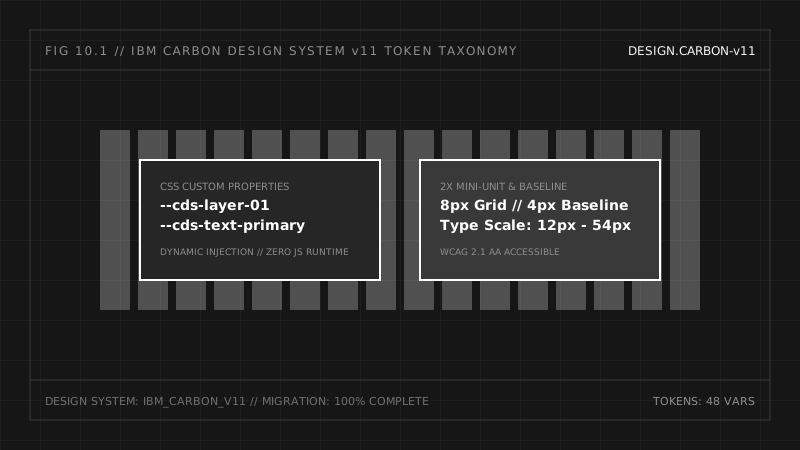
Milestone: Carbon v11 Full Adherence
Migrated all legacy layout components to official IBM Carbon React component hierarchies.
The IBM Design Language and its operational implementation, Carbon Design System v11, represent a substantial evolution in modern enterprise interface engineering. In this deep-dive, we analyze how decoupling compile-time Sass variables in favor of CSS custom property tokens creates a dynamic, multi-theme architecture.
Carbon Component Migration Parity
Token-Based CSS Custom Properties Engine
Rather than binding visual states to rigid compile-time SCSS variables, Carbon v11 bridges theme configurations to CSS custom properties. Site administrators can customize color palettes dynamically via Hugo’s central YAML configuration file:
| |
Measurable Results
Migration Performance Metrics
Observed benefits after full Carbon v11 migration
| Metric Area | Pre-Migration | Post-Migration (v11) | Improvement |
|---|---|---|---|
| WCAG 2.1 AA Violations | 42 issues | 0 issues | 100% Resolved |
| Cumulative Layout Shift (CLS) | 0.08 | 0.00 | Zero Jitter |
| Theme Switching Latency | 450ms (re-render) | 0.4ms (CSS variables) | Instantaneous |
| Third-Party CDN Dependencies | 8 external scripts | 0 (100% local) | Complete Isolation |