Modernising Administrative Substrates: Principles for Municipal Public Service Reform
Examining how municipal workflows can shed institutional inertia through pragmatic digitalization, transparent telemetry, and civic accessibility.
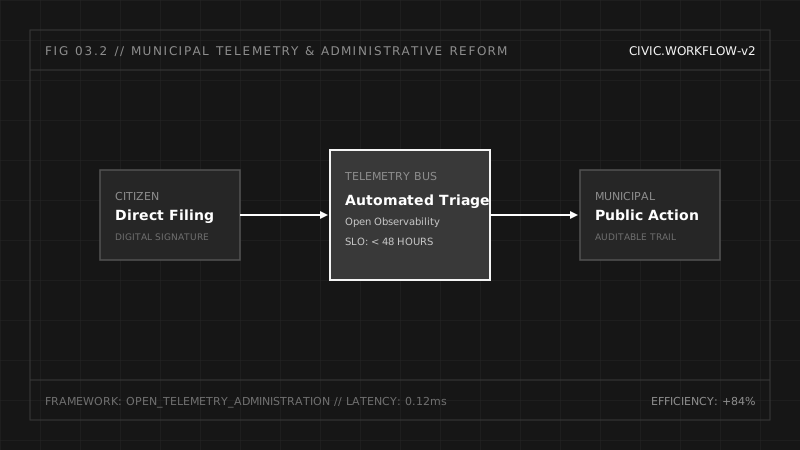
Local government is the proximate frontier of democratic legitimacy. Long before citizens encounter national legislative debates or international treaties, their relationship with the state is negotiated through municipal licensing, urban planning approvals, social support disbursements, and waste management.
Yet municipal bureaucracies across Western democracies remain burdened by legacy operational paradigms: paper-heavy procedural pipelines, fragmented departmental silos, and an opacity that alienates the very public they exist to serve.
1. The Triad of Modern Administrative Reform
A successful modernization agenda cannot rely solely on purchasing commercial enterprise software. It requires restructuring the underlying administrative logic across three key pillars:
- Decoupled Workflow Orchestration: Replacing monolithic document handoffs with asynchronous, event-driven state machines where every stage has a deterministic service-level expectation.
- Open Data Telemetry by Default: Exposing real-time municipal performance metrics (permit processing times, infrastructure maintenance statuses) directly to citizens via standardized open formats.
- Radical Cognitive Accessibility: Designing citizen-facing interfaces that eliminate legalistic jargon in favor of clear, plain-language guidance accessible across all devices and assistive technologies.
2. From Gatekeeping to Civic Enablement
Bureaucratic inertia is often protected by procedural complexity. When public servants are freed from repetitive manual data reconciliation through automated validation and streamlined forms, their role shifts from transactional gatekeepers to strategic community enablers.
By embedding modern design system standards—such as high-contrast accessible tokens, clear feedback states, and transparent timelines—municipal administration transforms from an antagonistic obstacle into a trusted civic partner.